


AI is reshaping how people search online, and law firms can’t afford to ignore it. Traditional SEO is no longer enough. Today, firms must learn how law firms can optimize their website for AI so that their content gets surfaced in AI-driven search results like Google’s AI Overviews.
This guide provides a practical, step-by-step approach to AIO (AI Optimization) custom for attorneys. You’ll see how to structure your site, improve your authority signals, and answer client questions in ways that AI tools and LLMs (Large Language Models) trust and cite.
Want to future-proof your digital presence? Work with Exults today to create an AIO strategy that gets your law firm cited in AI Overviews and LLMs.
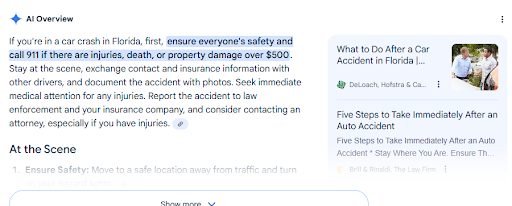
Searching for information in search engines like Google is changing. Instead of scanning 10 blue links, clients are increasingly reading AI-generated summaries at the very top of results. If your firm isn’t included in those answers, you’re invisible to potential clients.
The benefits of AI optimization in legal practice go beyond visibility:

The first step is understanding where your website currently stands. An AIO audit is similar to an SEO (Search Engine Optimization) audit but focused on AI-driven search visibility.
This foundation will show you where to refine your content so it’s ready for AI tools.
Several tools can make this easier:
An audit shows exactly what needs to be refined so your content is ready for AI tools.
AI search thrives on natural, question-based queries. Instead of short keywords like “injury lawyer Miami,” LLMs often surface answers to conversational searches such as “What is the average settlement for a rear-end car accident in Miami?”
By focusing on long-tail queries, you position your content for how law firms can optimize their website for AI Overviews.
If your content isn’t easy for AI to parse, it won’t get cited. Structuring your pages properly is key.
The goal is to create content that AI can cite word-for-word in an Overview.
AI tools don’t just pick content at random. They evaluate authority. To be cited in AI Overviews, your firm must demonstrate trustworthiness.
Without authority, even well-structured content may be ignored by AI systems.
Most law firms serve local clients, and AI Optimization and local SEO for attorneys go hand in hand.
These local signals increase your chance of being cited by both AI Overviews and voice assistants.
The ultimate goal is to learn how to get your law firm website cited by AI and LLMs. That means creating content that answers questions better than your competitors.
AI search is constantly evolving. What works today may change next month. Monitoring and updating are critical.
Refreshing content ensures your answers remain accurate, making them more likely to be cited by AI tools.
AIO isn’t a one-time task. It needs to be woven into your firm’s ongoing marketing and client service operations. The most successful firms treat AIO as part of their daily workflow instead of an extra project.
Attorneys bring subject-matter expertise. When they share insights on common client questions, recent case law changes, or emerging issues in their practice area, the marketing team can turn those insights into AI-friendly blogs and FAQs. Even short notes or quick Q&As from lawyers can fuel highly effective AIO content.
Client services teams are on the front lines, hearing the exact questions clients ask over the phone or in consultations. Documenting these questions and passing them to the marketing team creates a ready-made list of long-tail queries to target.
The marketing team ensures every piece of content, from blogs to practice pages, is structured with headers, schema markup, and FAQs so it’s easy for AI systems to parse. They also monitor analytics to see which pages are being cited by AI Overviews and adjust strategy accordingly.
Technical SEO still underpins AIO. IT/Dev staff ensure the site loads quickly, the schema is implemented correctly, and any crawl issues are resolved so content can be indexed and cited properly.
As firms rush to adapt, it’s easy to make missteps. Here are some common pitfalls to avoid:
Avoiding these mistakes ensures your AIO investment pays off in both visibility and client trust.
Attorneys often ask whether SEO is still necessary now that AI-driven search and AI Overviews are front and center. The truth is that SEO remains essential because it simply works differently alongside AIO.
Why SEO Still Matters:
Don’t think of SEO and AIO as competing. Think of them as complementary. SEO is the foundation, and AIO is the spotlight. Together, they ensure your firm is both visible and trusted.

The future of AI Optimization in legal marketing is clear: it will become as essential as SEO. Predictions include:
Law firms that adopt AIO early will lead the competition as these shifts occur.
Exults isn’t only another marketing agency. We’ve been guiding law firms through every shift in digital marketing from early SEO strategies to mobile-first indexing to today’s AI-driven search. Our advantage lies in combining legal marketing expertise with cutting-edge AIO strategies.
What Sets Exults Apart
AIO is not a replacement for SEO, it’s the next layer of optimization. Law firms that learn how to optimize their website for AI will gain visibility in AI Overviews, attract more informed clients, and build lasting authority.
Even small, consistent steps matter. Updating one blog, adding one FAQ, or refreshing one attorney bio each month compounds over time. Within a year, your firm could build an entire library of content that AI trusts, giving you an edge over competitors who delay action.
By following this step-by-step implementation blog, you’ll know exactly how to get your law firm website cited by AI and LLMs while future-proofing your practice against the changes in digital search.
Don’t wait for competitors to get ahead. Contact Exults today to start your law firm’s AIO strategy.
1. How long does it take for AIO results to show for a law firm?
Most law firms begin to see signs of AIO working within three to six months. This timeline depends on how much existing content can be restructured for AI Overviews and how consistently new, AI-friendly content is added. Quick results often come from adding FAQ sections to high-traffic practice pages, while bigger results like being cited in Google’s AI Overviews may take longer. The key is consistency by refreshing content regularly and monitoring performance, which ensures that visibility grows over time.
2. What kind of content do LLMs prefer from law firms?
LLMs (Large Language Models) don’t “prefer” content in the way humans do, but they are designed to surface content that’s clear, structured, and authoritative. For law firms, this means practice area pages with direct answers, FAQ-rich blog posts, comparison charts (like will vs trust), and content that cites credible legal sources. Short, vague content is less likely to get cited. Well-structured explanations and examples, especially with local context, increase the chance of being pulled into AI summaries or AI-powered SERPs.
3. How does AIO affect paid advertising like Google Ads or PPC(Pay-Per-Click)?
AIO and PPC complement one another. While PPC ensures immediate visibility, AI-driven search often highlights organic content. If your site is AIO-optimized, users may see your firm in both the AI Overview and in paid ads, reinforcing trust. AIO also helps reduce reliance on rising ad costs by driving organic, AI-cited visibility. Firms that blend AIO with PPC campaigns often report stronger lead quality and higher conversion rates, because prospects already recognize the firm from multiple touchpoints before clicking on an ad.
4. Do law firms need to optimize every page for AIO?
Not every page requires full AIO optimization. Focus first on high-impact content such as practice area pages, FAQs, and blogs that answer common client questions. Secondary pages like attorney bios or firm history should still be updated with authority signals (credentials, awards, publications), but the priority is content that clients search for most often. Once your core pages are optimized, you can gradually extend AIO strategies across your full site. The goal is quality and clarity over quantity.
5. How does AIO interact with ethical guidelines in legal marketing?
Compliance is critical. Law firms must ensure that AIO-optimized content remains accurate, transparent, and compliant with bar advertising rules. This means avoiding promises of guaranteed outcomes, including disclaimers where appropriate, and ensuring all content is attorney-reviewed. AIO for lawyers should enhance clarity, not replace professional oversight.
6. Can AIO help improve mobile search results?
Yes. Mobile and AI-driven search are closely linked. Many AI queries originate on mobile devices, often via voice search. Optimizing content for conversational, long-tail queries directly supports mobile-first search behavior. Fast-loading pages, mobile-friendly formatting, and concise FAQ sections make it easier for AI systems to extract answers. For law firms, this means that AIO not only increases visibility in AI Overviews but also ensures clients searching on the go find your site quickly and easily.
7. How can law firms track if their website is cited by AI Overviews or LLMs?
Tracking AIO performance is still evolving, but several methods help. Tools like Google Search Console can show impressions for queries often answered in AI Overviews. Some third-party analytics platforms now track when your site appears in AI citations. Internally, firms can monitor lead forms and intake calls by asking, “How did you find us?” If clients mention AI search tools or AI-driven answers, that’s a sign your AIO strategy is working. As AIO reporting tools mature, law firms that already track will be ahead of the curve.
Drive Cases Today