


AI Optimization (AIO) is quickly becoming a game-changer for digital visibility, content strategy, and client acquisition. For personal injury and workers’ compensation law firms, adopting AIO for lawyers isn’t optional anymore but essential to stay visible in search results, compete with other firms, and reach clients earlier in their decision process.
Firms that ignore AIO for law firms risk losing valuable leads to competitors who are already adapting to Google’s AI Overviews and other AI-driven Chatbots. With the right strategy, you can position your firm as the trusted authority that AI cites and potential clients turn to first.
In this blog, you’ll learn what AIO is, the difference between AIO and SEO for law firms, what changes law firms need to make, how small or mid-sized firms benefit, and steps your law firm can take now to use AIO to its advantage.
Want to see how AIO can put your firm ahead of competitors? Schedule a strategy session with Exults and start optimizing today.
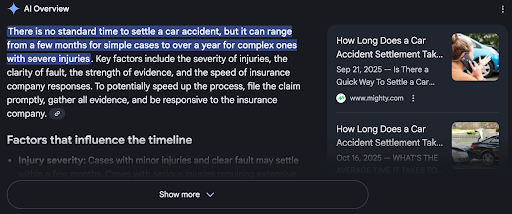
AI Optimization (AIO) means structuring your website, content, and online presence so AI-powered systems like Google’s AI Overviews and ChatGPT identify and quote your content as a reliable legal source.
Instead of simply ranking for keywords, AIO helps your firm become the cited answer when AI summarizes client questions such as “What should I do after a car accident in Florida?” or “How do I file a workers’ comp claim in Texas?”
How law firms can optimize for AI:
Many attorneys wonder, “Is AIO just SEO with a fancier name?” The answer is no. AIO vs SEO share similarities, but they aren’t identical.
| Traditional SEO | AIO |
| Focus on ranking via links, keyword density, and backlinks | Focus on being selected for AI summaries, snippets, ChatGPT, and AI Overviews |
| Optimizing for “10 blue links” in search results | Optimizing for conversational answers in AI |
| Long content to cover broad topics | Concise, structured content that directly answers queries |
| Keyword research, link building, and site performance | Semantic search, authority signals, structured answers |
For injury and workers’ comp firms, that means even a #1 ranking isn’t enough. If your content isn’t selected by AI systems, competitors could appear in front of you. AIO ensures your visibility both in search and in AI-generated responses.
The benefits of AIO in legal practice extend beyond rankings.

Adopting AIO is powerful, but it’s not without challenges. Law firms need to be aware of the risks so they can plan effectively.
Legal content requires strict accuracy. If AI cites your content incorrectly or summarizes it misleadingly, your reputation could be damaged. That’s why every piece of content must be carefully reviewed by attorneys before it goes live.
AI tools are great for auditing or structuring content, but they can’t replace the expertise of a licensed attorney. Over-relying on automation risks creating generic or inaccurate answers that won’t stand up in court or in a client’s consultation.
Staying competitive in AIO requires regular content updates, structured formatting, and local optimization. Smaller firms may struggle to keep pace without outside help. Partnering with an agency can reduce this burden.
If your content is outdated or vague and still gets cited by AI, it can create confusion. For example, citing old filing deadlines or outdated laws could harm credibility. Proactive updates are essential.
Here are practical examples of AIO strategies for your personal injury or workers’ comp firm:
Beyond the basics, here are additional tactical steps law firms can take:
For law firms, most clients search with local intent. That’s why combining AIO and local SEO is crucial.
Client reviews aren’t just social proof of trust but also signals to AI systems. Firms that mark up reviews with schema and respond consistently send trust signals that boost AIO visibility.
AI frequently cross-checks multiple sources. If your law firm appears in Avvo, Justia, or FindLaw with consistent NAP (Name, Address, and Phone Number) information, AI is more likely to trust your website as a source.
Mentions in local media or bar association publications can increase authority. When AI validates your firm’s expertise across multiple platforms, it increases the chance your answers appear in summaries.
Ignoring local optimization can mean your firm ranks #1 organically but gets skipped in AI because competitors structured their content better. Combining AIO with local SEO keeps your firm in the spotlight.
Here are examples of successful law firm content pieces optimized for AIO:
Personal Injury:
Each is written in plain language, structured for AI, and focused on how law firms can optimize for AI.
AIO isn’t just about showing up in search results, it also impacts the client intake process. When potential clients find your firm through an AI Overview or ChatGPT, they already have answers to their most pressing questions. This means the calls and consultations you receive are more efficient because clients arrive with a better understanding of their legal issue and what your firm offers.
For example, if someone reads a clear, structured guide on “What to Do After a Car Accident in Miami,” by the time they call your firm, they’re not asking general questions. They’re more informed and serious about hiring an attorney. They’re ready to discuss their specific case. It streamlines intake, so staff spend less time on unnecessary inquiries and attorneys can dedicate time to serious client matters. In short, AIO not only boosts visibility but also improves lead quality, giving your firm better cases and clients.
Even though AIO is gaining attention, some myths persist:
Clarifying these misconceptions helps law firms understand that AIO is a strategic layer that enhances all existing digital marketing efforts.
The future of AIO in legal marketing is evolving quickly, and law firms that prepare now will stay ahead.
AI will likely refine the way it sources and cites legal content. Firms that build libraries of well-structured and new content will be in a position to succeed.
As more people use Siri, Alexa, and Google Assistant, voice search will pull heavily from AIO-friendly content. AIO-optimized FAQs could become the default answers people hear when searching for a lawyer.
Law firms may begin integrating AIO principles into their own chatbots and intake systems, ensuring consistency between what clients read online and what they hear directly from the firm.
In five years, AIO may be as common as SEO. Firms that adopt early will already have established authority and rankings, while late adopters struggle to catch up.
The future of AIO in legal marketing extends well beyond search rankings. As AI tools become more sophisticated, they’ll merge with other technologies that law firms already use.
One development will be predictive analytics, where AI can forecast what kinds of cases are likely to increase in a region. Firms that publish content in line with those predictions will stay ahead of demand. Another shift will be personalized AI search results, where answers vary based on user history. Firms with highly targeted niche content will benefit most.
AIO will also tie into CRM (Customer Relationship Management) and remarketing systems. Imagine a visitor reading your FAQ on estate planning, then receiving retargeted ads offering a free consultation. Or a client interacting with your chatbot, which delivers AIO-optimized answers before scheduling an appointment. This blend of AIO, client data, and automation will help law firms attract and convert clients more efficiently than ever.
Marketing is not only Exults’ service. We specialize in helping law firms adapt to changing digital environments.
We’ve worked with law firms of all sizes and understand compliance requirements, ethical boundaries, and the importance of trust in client-facing content.
Exults combines technical expertise (schema, structured data, analytics) with content strategy (blogs, guides, video scripts) to deliver a comprehensive AIO solution.
The AIO landscape evolves monthly. Our team stays ahead of Google’s AI changes, ensuring your law firm doesn’t fall behind.
AIO isn’t a passing trend, but it’s the future of AI in legal marketing. Law firms that adapt now will capture visibility, trust, and clients that competitors miss. The future of AIO in legal marketing belongs to those who answer client questions clearly, show authority, and continuously update their content.
Don’t wait until AIO becomes the standard. Contact Exults today to start optimizing your law firm for AI and get ahead in search.
1. What are the first steps in AIO for law firms?
The best way to begin with AIO for law firms is to start small and focused. Identify the top client questions in your practice area. For example, “How much is my car accident claim worth?” or “When should I report a workplace injury?” and create clear, structured answers on your website. Use headings, bullet points, and FAQs so AI systems can easily extract information. From there, update your Google Business Profile and review signals, since both play a role in how law firms can optimize for AI. Once those basics are in place, you can expand into more advanced strategies like schema markup and voice search optimization.
2. How does AIO affect client trust in a law firm?
AIO for law firms directly impacts credibility. When your content appears in an AI Overview, potential clients see it as endorsed by Google’s AI. This first impression builds confidence before they even visit your site. The benefits of AIO in legal practice go beyond traffic. They include trust, authority, and stronger client relationships. By publishing clear, attorney-reviewed answers, your firm establishes itself as a reliable authority.
3. What role do reviews play in AIO for law firms?
Reviews are critical for both SEO and AIO. Google’s AI favors firms with consistent, positive reviews when citing answers. For example, if two firms publish similar content, the one with stronger review signals often wins visibility in AI. Encouraging authentic client reviews on Google Business Profile, Avvo, and Justia strengthens your AIO for law firms strategy and helps your practice stand out as credible and trustworthy.
4. How often should law firms update their content for AIO?
Content freshness is one of the biggest factors in how law firms can optimize for AI. A best practice is to review and refresh practice area pages and high-performing blogs every 6 to 12 months. Update case law, deadlines, and local statutes to ensure accuracy. Regular updates signal that your content is reliable, increasing its chances of being cited by AI. Outdated information, on the other hand, can hurt credibility and rankings.
5. Does AIO only matter for large law firms?
Not at all. The benefits of AIO in legal practice often help small and mid-sized firms the most. Big firms tend to publish broad, generic content, while smaller practices can dominate niche, location-specific queries like “Steps to File a Workers’ Comp Claim in [City]” With AIO, even solo practitioners can show up in AI, competing directly with larger firms by delivering targeted, high-value content.
6. Can AIO help with voice search results?
Yes. AIO for lawyers is closely tied to voice search. Devices like Alexa, Siri, and Google Assistant often pull responses from the same sources as AI. By formatting your content with structured FAQs, concise headers, and conversational language, your firm increases its chances of being selected for voice search queries.
7. How does AIO improve lead quality for law firms?
Compliance is a top concern in legal marketing, and AIO for lawyers must be handled carefully. By structuring content with attorney-reviewed answers, citations to statutes, and accurate disclaimers, firms can meet ethical guidelines while still being optimized for AI. AIO also encourages regular updates, which help ensure information stays current with changes in the law. Done correctly, AIO for law firms improves visibility without sacrificing professional responsibility or compliance with state bar rules.
Drive Cases Today